- 2 月 10, 2026
- News
- 0 Comments
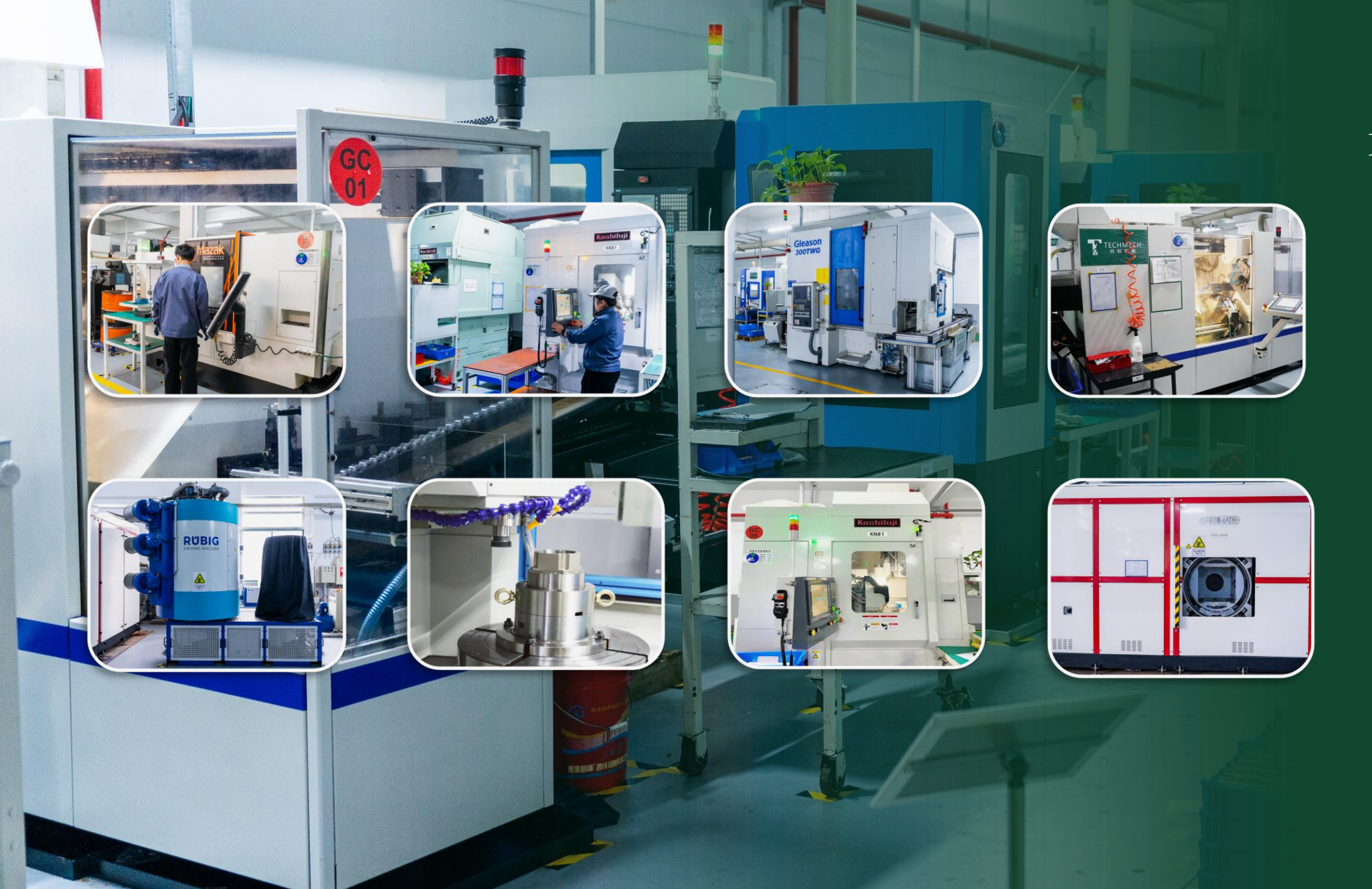
Equipment matters so much in gear reducer manufacturing
A gear reducer is basically a precision translator of power. Tiny errors in geometry, heat treatment, or assembly get amplified once torque, load, and time come into play. Manufacturing equipment is what determines whether those errors exist at all.
Here’s how—and why—it matters.
1. Precision equipment = precision gears
Gear reducers live and die by accuracy.
Advanced machines (CNC gear hobbing, shaping, grinding, honing) directly control:
- Tooth profile accuracy
- Lead and pitch errors
- Lead and pitch errors
- Surface roughness
- Backlash consistency
Even microns matter. Poor equipment produces gears that:
- Run noisier
- Wear faster
- Generate heat
- Lose efficiency
High-end equipment creates gears that mesh smoothly, distribute load evenly, and last much longer.
2. Heat treatment equipment defines gear strength and life
You can machine a gear perfectly—and still ruin it with bad heat treatment.
Modern heat treatment equipment (carburizing furnaces, induction hardening, nitriding systems) controls:
- Case depth
- Hardness uniformity
- Distortion after hardening
- Residual stress
Good equipment means:
Poor heat treatment equipment leads to cracking, pitting, premature failure—even if machining was good.
3. Assembly equipment ensures real-world performance
A reducer that looks good on paper can fail if assembled poorly.
Precision assembly equipment helps with:
- Bearing preload control
- Shaft alignment
- Gear contact pattern optimization
- Seal installation accuracy
This directly affects:
- Noise & vibration
- Efficiency
- Bearing life
- Oil leakage
High-quality assembly tools turn good parts into a reliable system, not just a collection of components.
4. Inspection & testing equipment protects quality
You can’t control what you can’t measure.
Advanced inspection equipment (CMMs, gear analyzers, vibration testers, load test rigs) allows manufacturers to:
- Detect errors early
- Maintain consistent quality
- Validate performance under load
- Reduce field failures
For customers, this means:
- Predictable performance
- Fewer breakdowns
- Easier maintenance planning
For manufacturers, it means reputation, repeat business, and fewer warranty claims.
What good equipment brings to the gear reducer itself
High-quality manufacturing equipment results in reducers that offer:
- Higher efficiency (less power loss)
- Lower noise and vibration
- Higher torque density
- Longer service life
- Better reliability under shock and variable loads
In short: better gears behave better in real machines.
What it brings to the entire machine using the reducer
A good reducer doesn’t just help itself—it improves the whole system:
- Motors run cooler
- Energy consumption drops
- Maintenance intervals increase
- Machine uptime improves
- Total cost of ownership goes down
That’s why industries like robotics, wind power, steel mills, mining, and automation care obsessively about reducer quality—it affects everything downstream.
Big-picture takeaway
Equipment is not just a manufacturing tool—it’s a performance multiplier.
- Basic equipment → acceptable reducers
- Advanced equipment → quiet, efficient, long-life reducers
- World-class equipment → competitive advantage