- 4 月 29, 2026
- News
- 0 Comments
In high-throughput automation environments, delta (parallel) robots have become a preferred solution for applications that demand both speed and precision. From food packaging to electronics assembly, their unique kinematic design enables exceptional dynamic performance. However, achieving consistent results at such high speeds depends not only on robot design, but also on the quality of the motion components that drive the system.
This is where GearKo’s expertise in high precision planetary gearboxes plays a critical role.
A Parallel Structure Built for Performance
Delta robots use three or four kinematic chains to connect a fixed base to a lightweight moving platform. Typically constructed from carbon fiber or aluminum alloy, these arms provide high rigidity while minimizing mass.
The closed-loop structure distributes forces across multiple links, resulting in greater stability compared to traditional serial robots. Combined with a moving platform that often weighs less than 1 kg, delta robots can achieve extremely high acceleration—up to 15G in advanced systems.
However, such performance places significant demands on drivetrain components. High acceleration and rapid directional changes require gear systems that can maintain precision under dynamic loads without introducing backlash or instability.
Motion Performance Depends on Transmission Quality
Delta robots are known for their speed, with high-end systems achieving cycle times as low as 0.25 seconds for pick-and-place operations. Acceleration typically ranges between 10G and 15G—far exceeding that of conventional robotic systems.
Maintaining accuracy at these speeds requires more than just structural design. Gearboxes must deliver consistent torque transmission, minimal backlash, and high rigidity. Even small deviations in transmission can lead to positioning errors, vibration, or reduced repeatability.
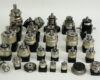
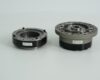
GearKo’s planetary gearboxes are engineered to meet these demands. With high rigidity one-piece structures, optimized helical gearing, and precision manufacturing to DIN6 standards, they provide stable motion control under high dynamic conditions. Low backlash—often below 1 arcmin in single-stage configurations—helps ensure that delta robots maintain repeatability in the range of 0.05 to 0.1 mm.
Enabling High-Speed Applications Across Industries
The combination of delta robot kinematics and high-performance motion components enables a wide range of applications:
- Food and pharmaceutical processing:High-speed sorting and packaging of items such as confectionery, tablets, and caps, where both hygiene and throughput are critical.
- Electronics manufacturing:Precision handling and assembly of small components, including PCB placement and 3C product assembly.
- Logistics and parcel sorting:Integration with machine vision systems allows for rapid and accurate sorting in high-volume environments.
In each of these applications, consistent performance over time is essential. GearKo’s focus on durability, low noise, and long service life supports stable operation in continuous production environments.
Supporting the Next Generation of Automation
As delta robots evolve, the demands on motion components continue to increase. Integration with AI-based vision systems and force control technologies requires even greater responsiveness and accuracy from the drivetrain. At the same time, modular system design and flexible production lines call for components that are easy to integrate and maintain.
GearKo addresses these needs through continuous design optimization, advanced heat treatment processes, and high-precision manufacturing. Its planetary gearboxes are designed not only for initial performance, but for long-term reliability under real operating conditions.
Conclusion
Delta robots represent one of the most efficient solutions for high-speed automation, but their performance ultimately depends on the quality of the motion system behind them. By combining advanced robotic design with high precision transmission technology, manufacturers can achieve both speed and accuracy without compromise.
With its focus on rigidity, precision, and durability, GearKo provides the critical motion components that help unlock the full potential of delta robot systems in modern industrial applications.